Evidence-informed coach education for movement analysis, athlete assessment, biomechanics, motor learning, skill acquisition, and long-term athlete development.
This program teaches coaches to move beyond one-size-fits-all mechanics and toward assessment-based, movement-informed athlete development.
Learn how motor learning, biomechanics, ecological dynamics, and constraints shape athletes.
Observe movement tendencies, morphology, timing, field expression, and development needs.
Create training environments that support transfer from practice into competition.
Built for coaches and leaders who want a deeper understanding of athlete development.
Improve evaluation, practice design, and individual player development.
Apply movement science across hitting, throwing, fielding, and long-term development.
Connect training programs to movement identity and sport transfer.
Build a stronger foundation in coaching science and athlete-centered development.
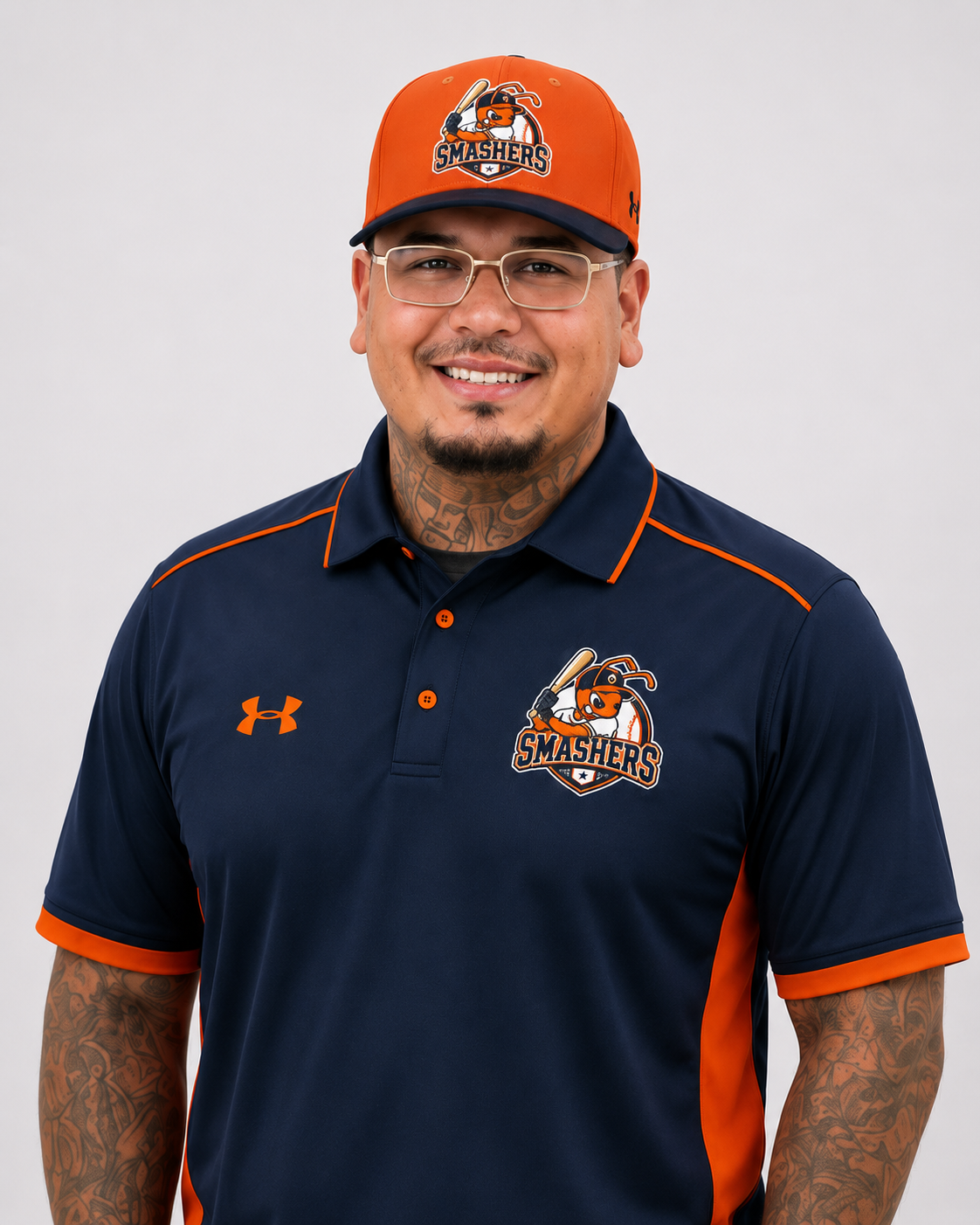
Meet Your Instructor
This program was built to help coaches stop forcing every athlete into the same mechanical model and start understanding how each athlete moves, learns, adapts, and develops.
The goal of the TX Smashers Institute is to give coaches a structured, research-informed pathway for evaluating athletes, designing better practices, communicating more effectively, and building long-term development systems.
Preview the 18 modules included in the certificate pathway.
Motor variability, constraints, ecological dynamics, and individualized coaching.
Practice design, feedback, implicit learning, transfer, and durable skill development.
Compact and length-based movement strategies in hitting, pitching, and fielding.
Elastic rhythm-based athletes versus grounded pressure-based athletes.
Aerial + Flexion, Aerial + Extension, Terrestrial + Flexion, and Terrestrial + Extension.
Coach-level screening, observation, referral awareness, and movement foundations.
Structure, limb length, rib cage angle, hip orientation, and movement tendency.
Movement identity applied to load, stride, barrel path, timing, and cueing.
Delivery identity, velocity, command, pitch movement tendencies, and development planning.
Movement identity across defensive actions, throwing expression, and running patterns.
How to select drills that support the athlete instead of forcing one model.
External focus, analogies, bandwidth feedback, and profile-specific communication.
Full athlete evaluation, decision trees, movement profile documentation, and re-evaluation.
Elastic, muscular, short-range, and long-range strength models for athlete development.
Rhythm-based and structure-based timing models across hitting and pitching.
Growth, maturation, training phases, injury history, and development over time.
Evidence-informed coaching, communication, boundaries, referrals, and athlete welfare.
Implementation systems, coach education, parent communication, QA, and capstone planning.
The program includes structured learning resources, practical assignments, and assessment tools.
67-page instructional curriculum covering all 18 modules.
113-page workbook with quizzes, exams, rubrics, labs, and scoring guides.
Field observations, athlete evaluations, video analysis, and development plans.
Module quizzes, level exams, and a final certification examination.
Certificate of completion issued after all assigned requirements are completed.
Future video lessons and walkthroughs as the Institute expands.
Common questions about the course format and completion process.
The first version is being prepared for online delivery with structured requirements and cohort-style support.
No. This is a private educational certificate issued by TX Smashers Institute, not state licensure or university credit.
Yes. The program includes module quizzes, level exams, practical labs, and a final certification examination.
Applications for the inaugural TX Smashers Institute Coach Certification Cohort are being prepared. Coaches interested in early access, cohort information, or program details may request information below.